
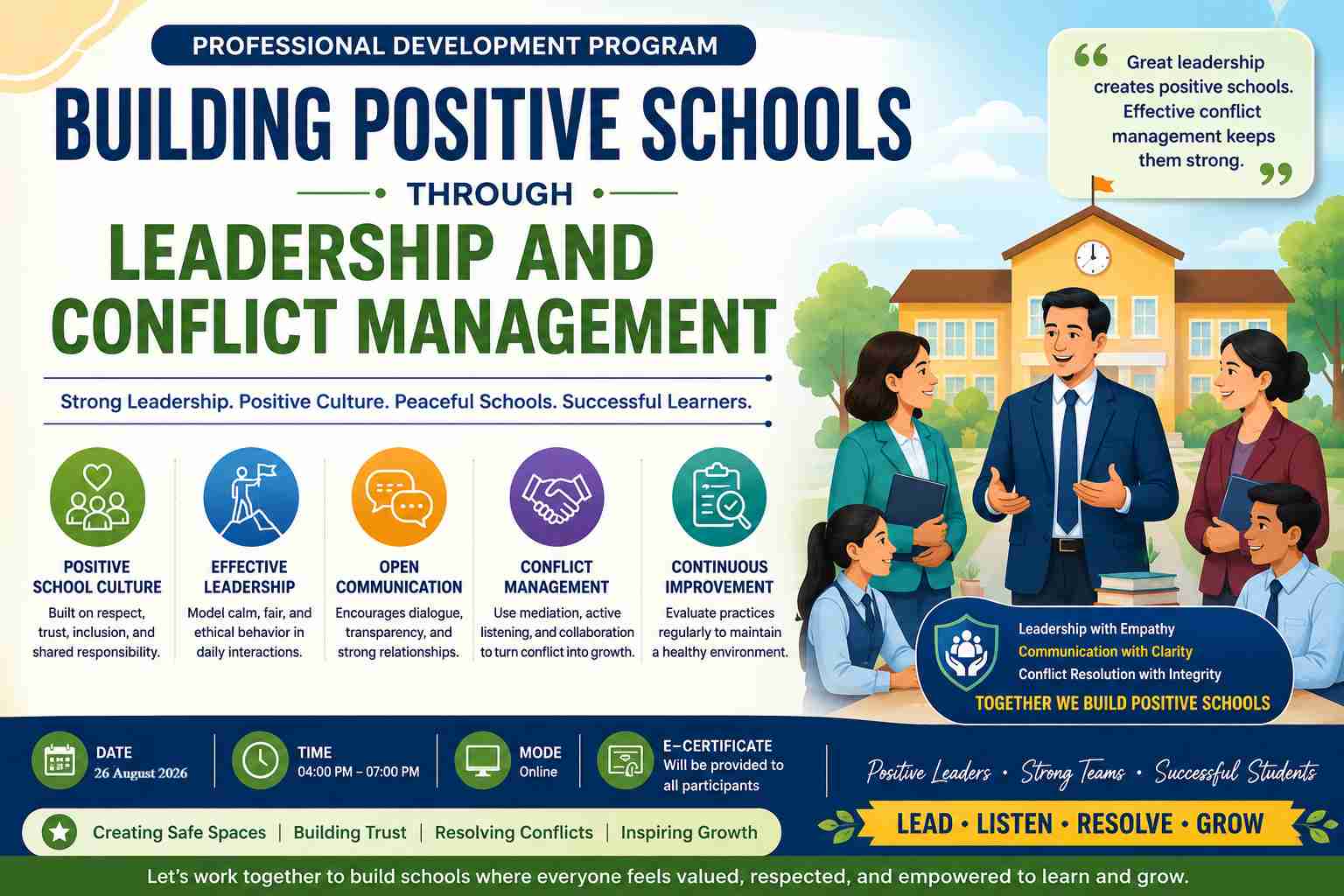
Building Positive Schools Through Leadership and Conflict Management
About this program
Professional Development Program on "Building Positive Schools Through Leadership and Conflict Management". A positive school is a place, where students feel safe, teachers feel supported, and learning happens in a calm and respectful environment. School leadership plays a central role in shaping this environment by setting clear expectations, modeling respectful behavior, and encouraging open communication. When conflicts arise, effective management helps protect trust, reduce tension, and keep attention on teaching and learning. Leadership in a positive school is not limited to giving instructions. It includes listening to staff, involving parents, guiding students with empathy, and making decisions that are fair and transparent. A strong leader builds teamwork, motivates staff, and creates a culture where people can express concerns without fear. This kind of leadership helps prevent many conflicts before they grow into serious problems. Conflict management is an essential leadership skill in schools because disagreements can arise among students, teachers, parents, and administrators. Effective strategies include active listening, mediation, collaboration, and regular reflection on the root causes of problems. Instead of blaming others, leaders should encourage accountability and joint problem-solving so that conflict becomes an opportunity for growth. To build positive schools, leaders should promote clear rules, respectful relationships, staff development, and open channels for communication. They should also create a culture of peace by responding to conflict early, handling disputes calmly, and focusing on long-term solutions rather than temporary fixes. In this way, leadership and conflict management work together to improve school climate, strengthen cooperation, and support student success. Key Points Positive school culture depends on respect, trust, inclusion, and shared responsibility. Leaders should model calm, fair, and ethical behavior in daily interactions. Open communication helps reduce misunderstandings and hidden tensions. Conflict management skills such as mediation and active listening improve relationships. Continuous evaluation of school practices helps maintain a healthy learning environment. Conclusion A school becomes truly positive when leadership is proactive and conflict is handled constructively. By combining vision, communication, empathy, and fair conflict resolution, school leaders can create an environment where everyone feels valued and learning can thrive.