
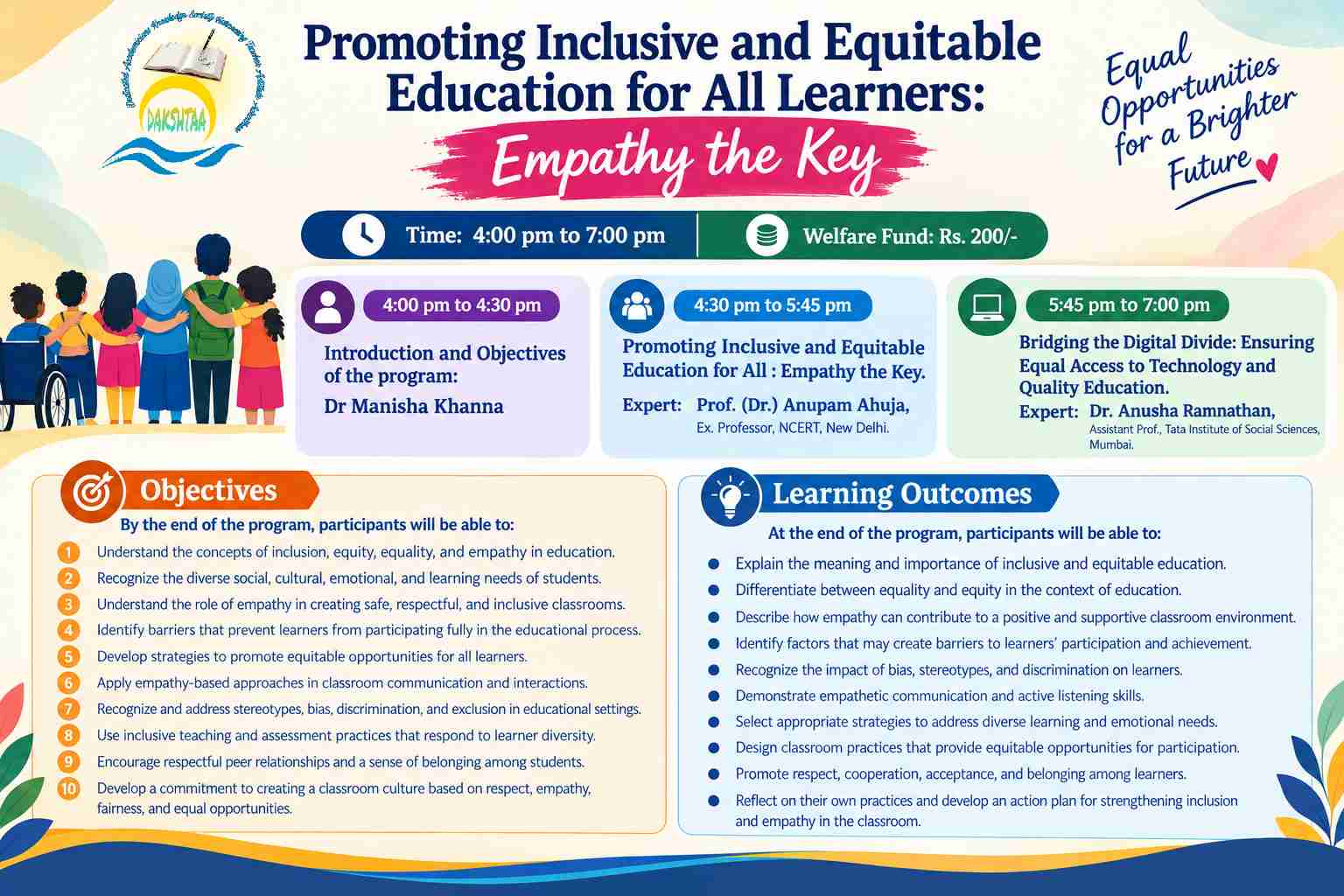
Promoting Inclusive and Equitable Education for all Learners: Empathy the Key
About this program
Promoting Inclusive and Equitable Education for all Learners: Empathy the Key 4:00 pm to 4:30 pm - Introduction and Objectives of the program: Dr Manisha Khanna 4:30 pm to 5:45 pm: Promoting Inclusive and Equitable Education for All : Empathy the Key. Expert: Prof. (Dr.) Anupam Ahuja, Ex. Professor, NCERT, New Delhi. 5:45 pm to 7:00 pm: Bridging the Digital Divide: Ensuring Equal Access to Technology and Quality Education. Expert: – Dr. Anusha Ramnathan, Assistant Prof., Tata Institute of Social Sciences, Mumbai “Promoting Inclusive and Equitable Education for All Learners: Empathy – The Key” Objectives By the end of the program, participants will be able to: 1. Understand the concepts of inclusion, equity, equality, and empathy in education. 2. Recognize the diverse social, cultural, emotional, and learning needs of students. 3. Understand the role of empathy in creating safe, respectful, and inclusive classrooms. 4. Identify barriers that prevent learners from participating fully in the educational process. 5. Develop strategies to promote equitable opportunities for all learners. 6. Apply empathy-based approaches in classroom communication and interactions. 7. Recognize and address stereotypes, bias, discrimination, and exclusion in educational settings. 8. Use inclusive teaching and assessment practices that respond to learner diversity. 9. Encourage respectful peer relationships and a sense of belonging among students. 10. Develop a commitment to creating a classroom culture based on respect, empathy, fairness, and equal opportunities. Learning Outcomes At the end of the program, participants will be able to: • Explain the meaning and importance of inclusive and equitable education. • Differentiate between equality and equity in the context of education. • Describe how empathy can contribute to a positive and supportive classroom environment. • Identify factors that may create barriers to learners' participation and achievement. • Recognize the impact of bias, stereotypes, and discrimination on learners. • Demonstrate empathetic communication and active listening skills. • Select appropriate strategies to address diverse learning and emotional needs. • Design classroom practices that provide equitable opportunities for participation. • Promote respect, cooperation, acceptance, and belonging among learners. • Reflect on their own practices and develop an action plan for strengthening inclusion and empathy in the classroom.